Rethinking how personalized products are built and sold
Client
Lemonetti
Year
Launching Q4 2026
Personalized print stores are everywhere. And almost all of them share the same three problems. The editor is the product, and it shows. Customers spend more time configuring than choosing. The experience feels like filling out a form, not creating something.
The output is unpredictable. Font combinations break. Layouts that looked fine on screen arrive wrong. The customer carries the risk of a bad result. The preview lies. A flat mockup on a white background tells you almost nothing about how a print will look in an actual room.
For a product you can't return, that's a serious trust problem.
Lemonetti was built to fix all three. I didn't want to improve on what's out there, I wanted to rethink how the whole thing work.
Scope of Work
The Editor
Most editors give customers total control, then deliver unpredictable results. Lemonetti works the other way around. Customers make the choices that matter (like names, dates, cities or songs) and the system handles everything that could break: spacing, sizing, layout balance, resolution. No sliders they don't understand. The output is always production-ready.
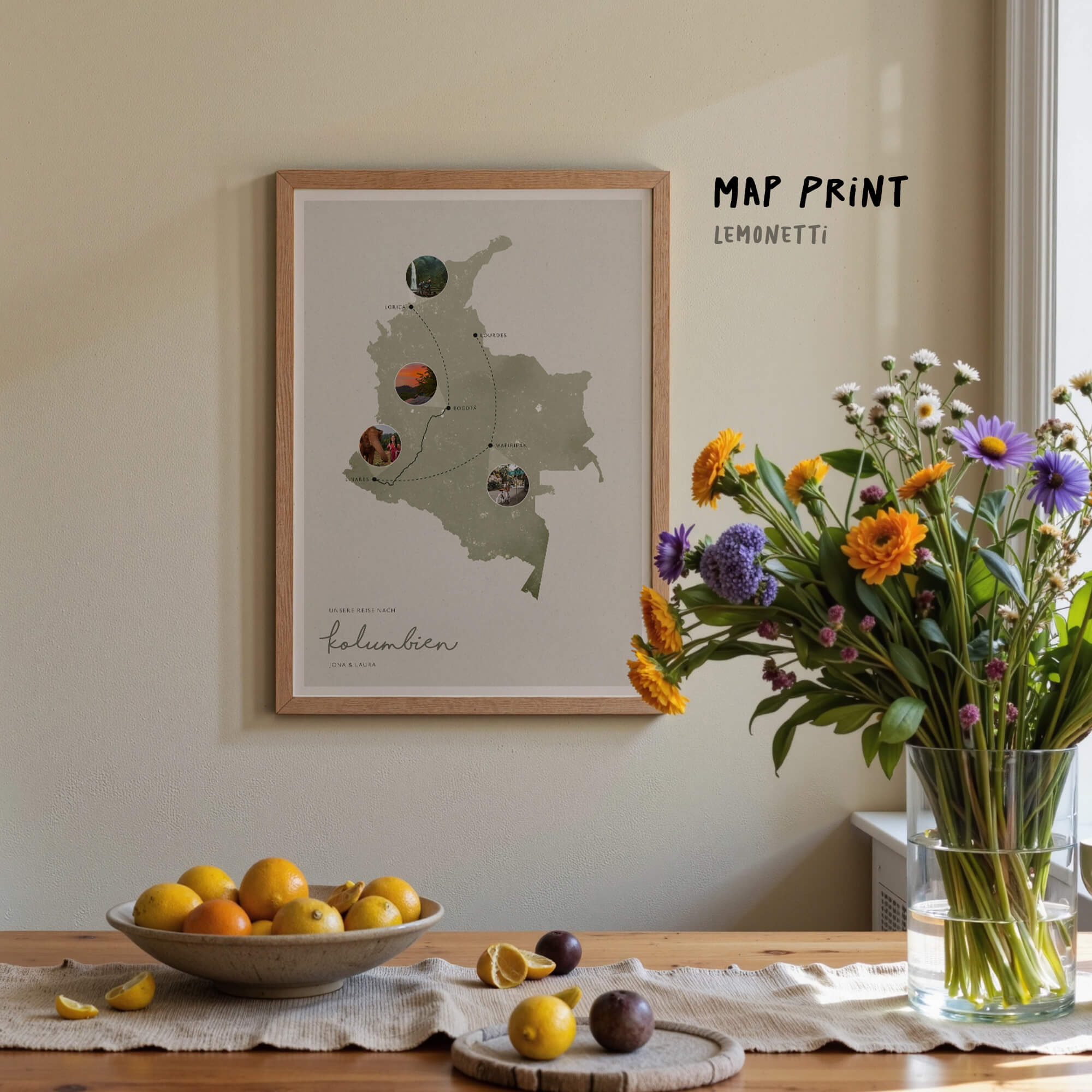
The product is built around personal details, not text fields. A name in a font is not the same as a wedding date in a design built around that date. Lemonetti products are specific to a person or couple in a way that changes what they actually are.
The platform is built to scale. A custom web app sits under Shopify and makes every new product launch fast and consistent. The editor logic, rendering pipeline, and 3D preview system are all modular, so adding new products doesn't mean rebuilding from scratch.
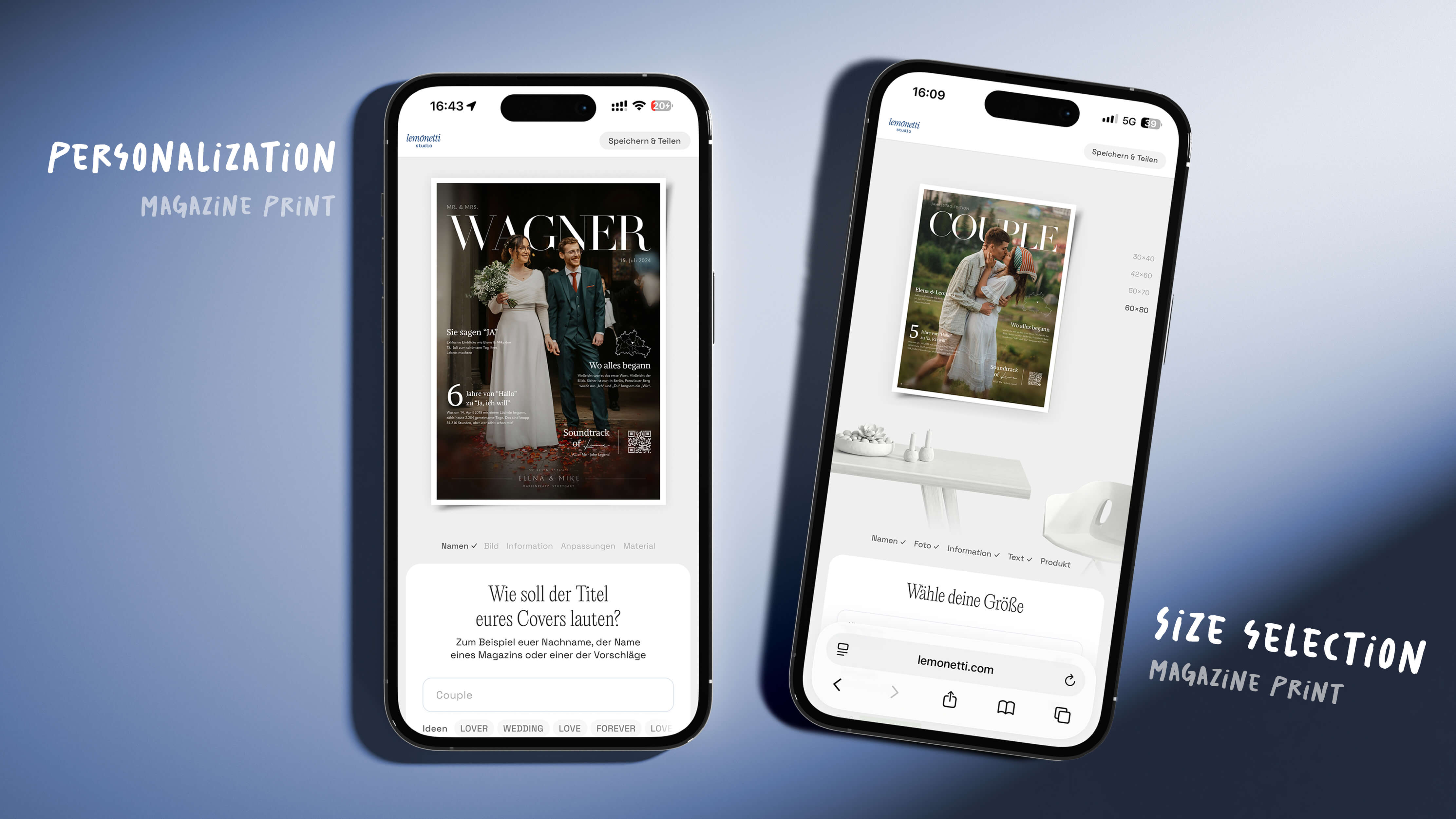
The architecture is a platform. Under Shopify sits a custom web app built to make new product launches fast and consistent. The editor logic, rendering pipeline, and 3D preview system are all modular to scale quickly.
Flagship Products
Most personalized print stores sell customization. You pick a template, type a name, choose a color. Simple by design, because anything more complex breaks in someone's hands.
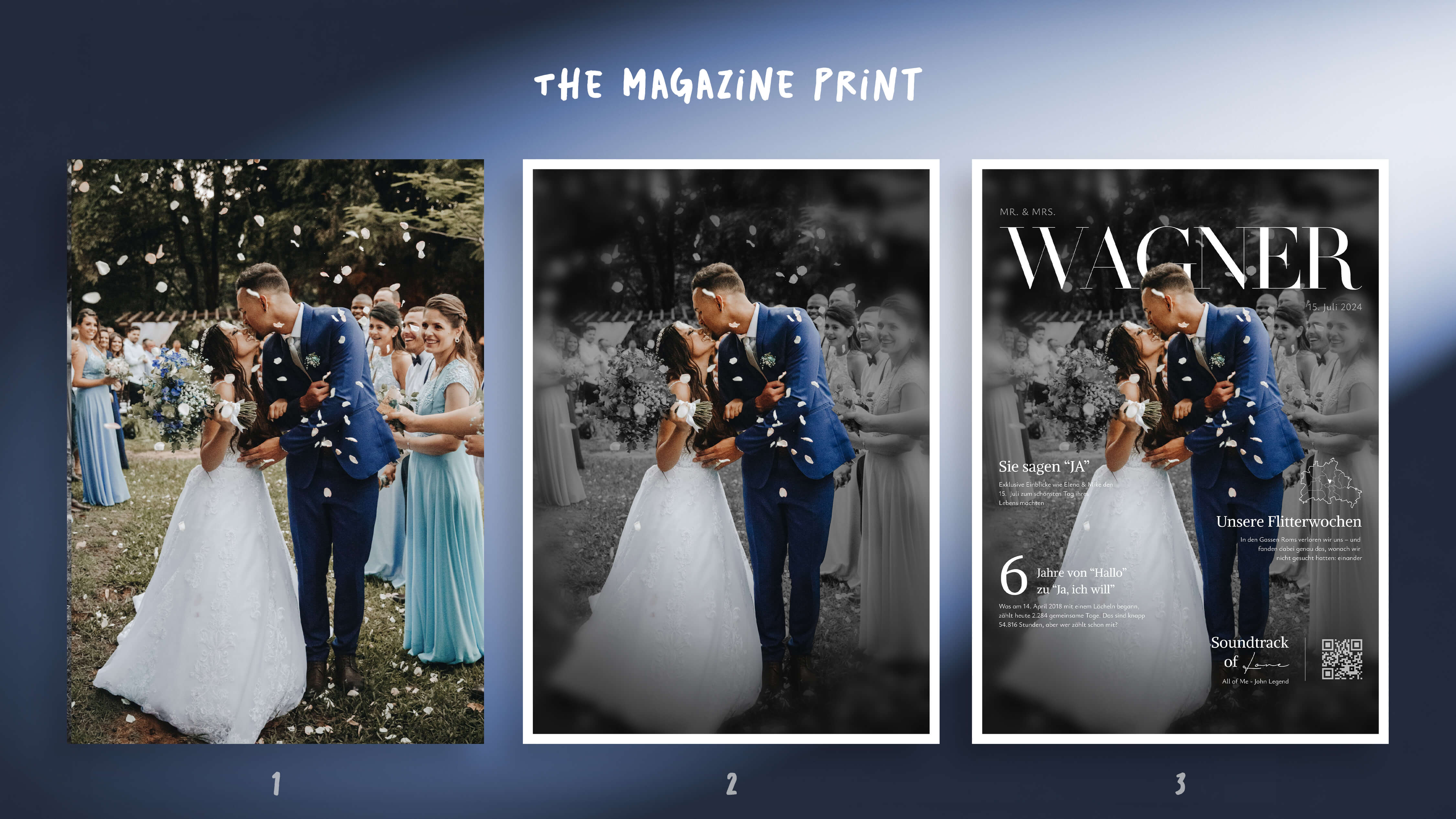
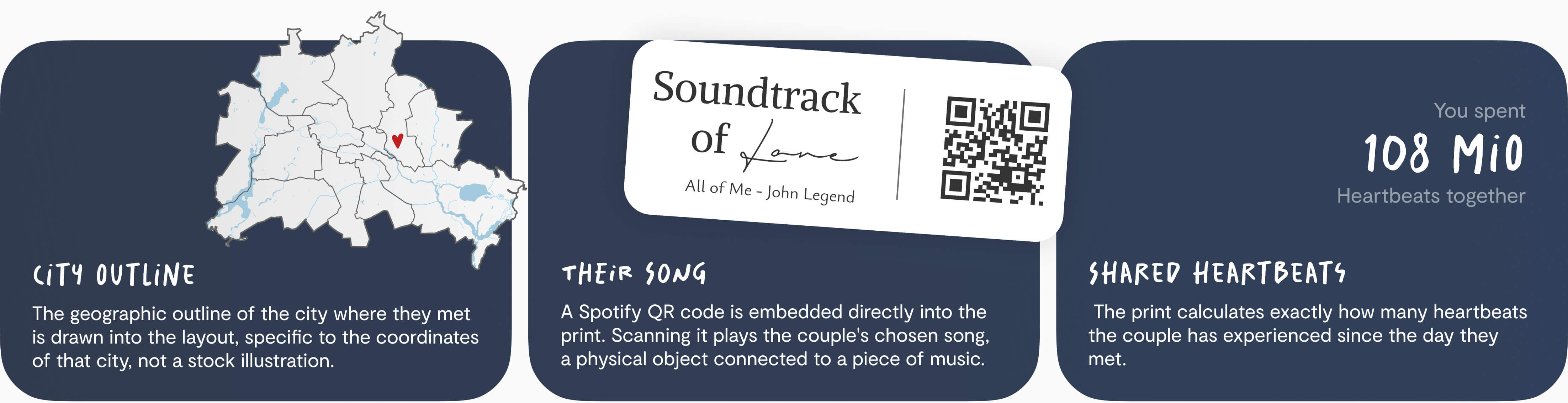
Lemonetti's products work differently. Each one is built around dynamic features that run on customer-specific data, things that can't be manually configured, can't be copied into Canva, and can't be replicated by a competitor without rebuilding the underlying system. The complexity is real, but it stays hidden. What customers experience is a few simple inputs and a finished product that feels like it was made for them (because it was).
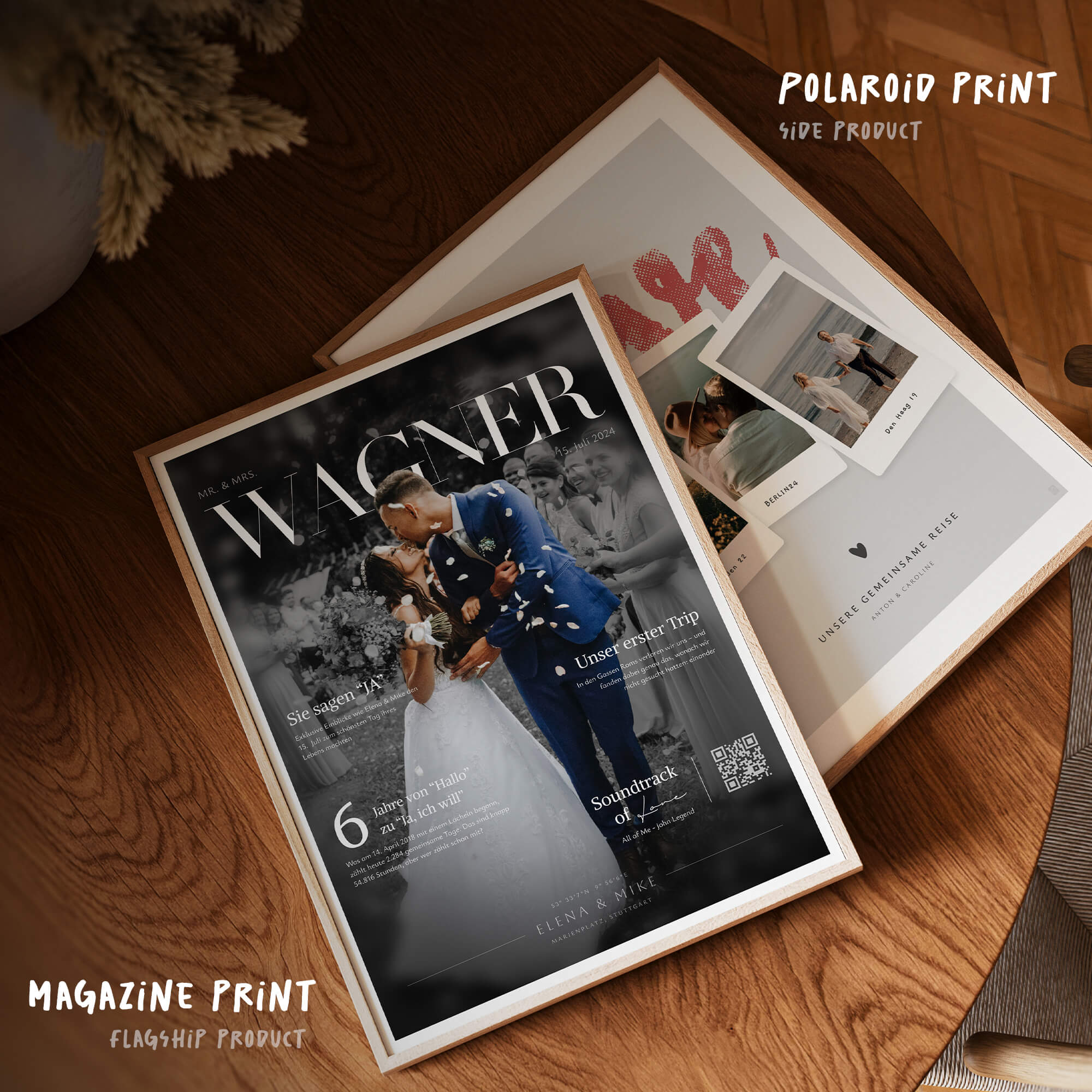
The Magazine Print is the first of these. An editorial-style couples print built around the VOGUE cover format, designed to hang on a wall rather than end up forgotten in a drawer. The format is familiar. What's inside it isn't.
Where this goes
Lemonetti is a product platform. The system (the rendering logic, the editor architecture, the AR preview pipeline) supports a growing catalogue of products without rebuilding the foundation each time.
The Magazine Print sets the template: technically complex, emotionally meaningful, and priced accordingly. Every new product that launches runs on the same infrastructure and adds its own customer-specific logic on top.
The economics here work differently from standard print-on-demand. Customers are buying something that couldn't exist without their specific inputs. That shifts willingness to pay, cuts return rates, and drives repeat purchases across different occasions.
The plan: more products, each targeting a specific moment or relationship, built on the same system, sold through the same store. Every new launch is cheaper and faster than the last. And every customer who buys one product is already inside an experience built to bring them back.